

Case Study
Medical CDSS Case Study: Transforming Print To AI-Ready App
Learn how a medical publisher used Isar and RAG AI to turn static ePubs into a high-performance, offline-first clinical decision support system.
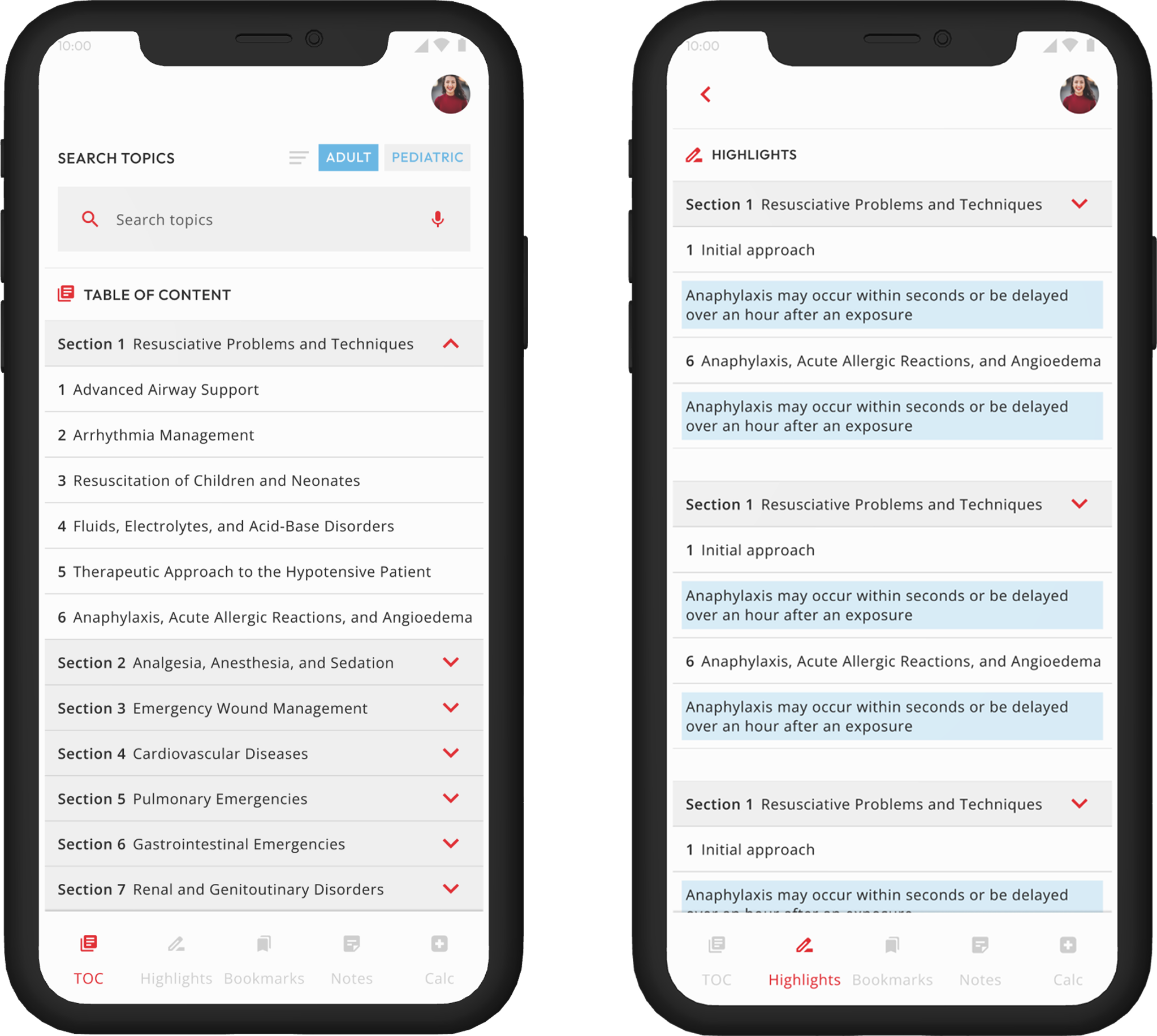
Key Result
Sub-millisecond retrieval of millions of medical entities offline
Industry
Client
Medical Education & Point-of-Care Provider
Tech Stack

How A Global Medical Publisher Built A High-Performance Offline CDSS With AI
To remain competitive in a digital-first healthcare market, a premier medical publisher transformed its iconic print handbook into a cross-platform Clinical Decision Support System (CDSS). By leveraging an offline-first architecture, a Rust-based NoSQL engine, and RAG-driven AI, the client delivered sub-millisecond clinical answers to physicians worldwide.
The Challenge: Static Content in a High-Speed Clinical World
The client’s authoritative medical content was "functionally inert," trapped in physical books and linear ePub files. In high-pressure hospital environments, clinicians cannot browse tables of contents; they need instant, actionable answers.
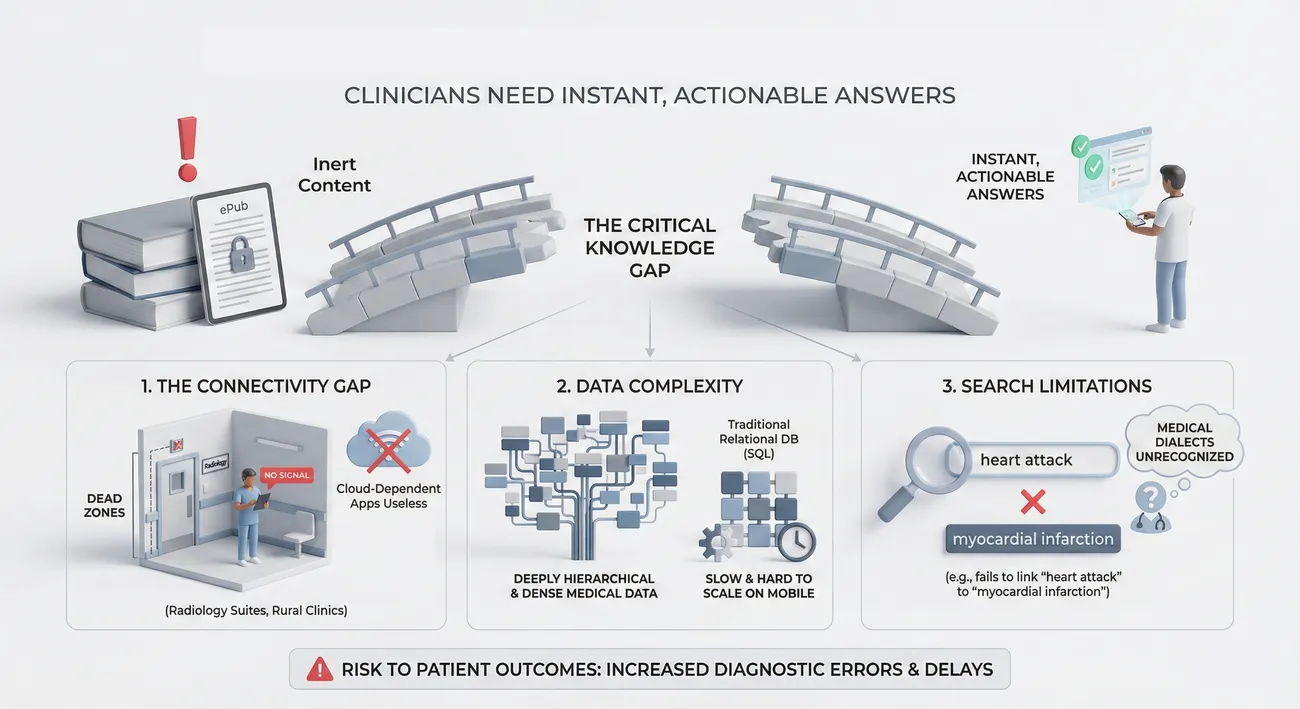
The project faced three critical obstacles:

The Connectivity Gap
Medical professionals often work in "dead zones" (radiology suites or rural clinics), making cloud-dependent apps useless.
Data Complexity
Medical data is deeply hierarchical and dense, making traditional relational databases (SQL) slow and difficult to scale on mobile devices.
Search Limitations
Standard search fails to recognize "medical dialects" (e.g., failing to link "heart attack" to "myocardial infarction").
The Solution: A High-Performance, Offline-First Architecture
We bypassed legacy technical debt to build a "greenfield" solution optimized for speed and clinical precision.
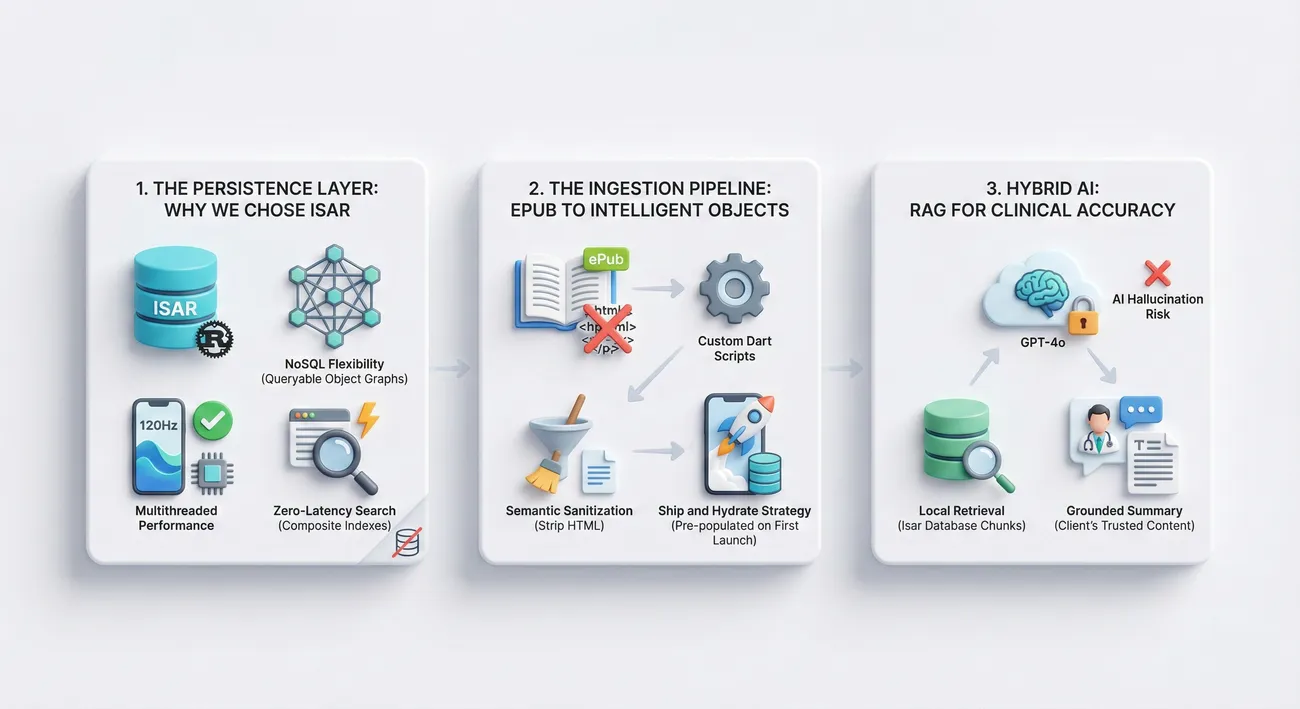
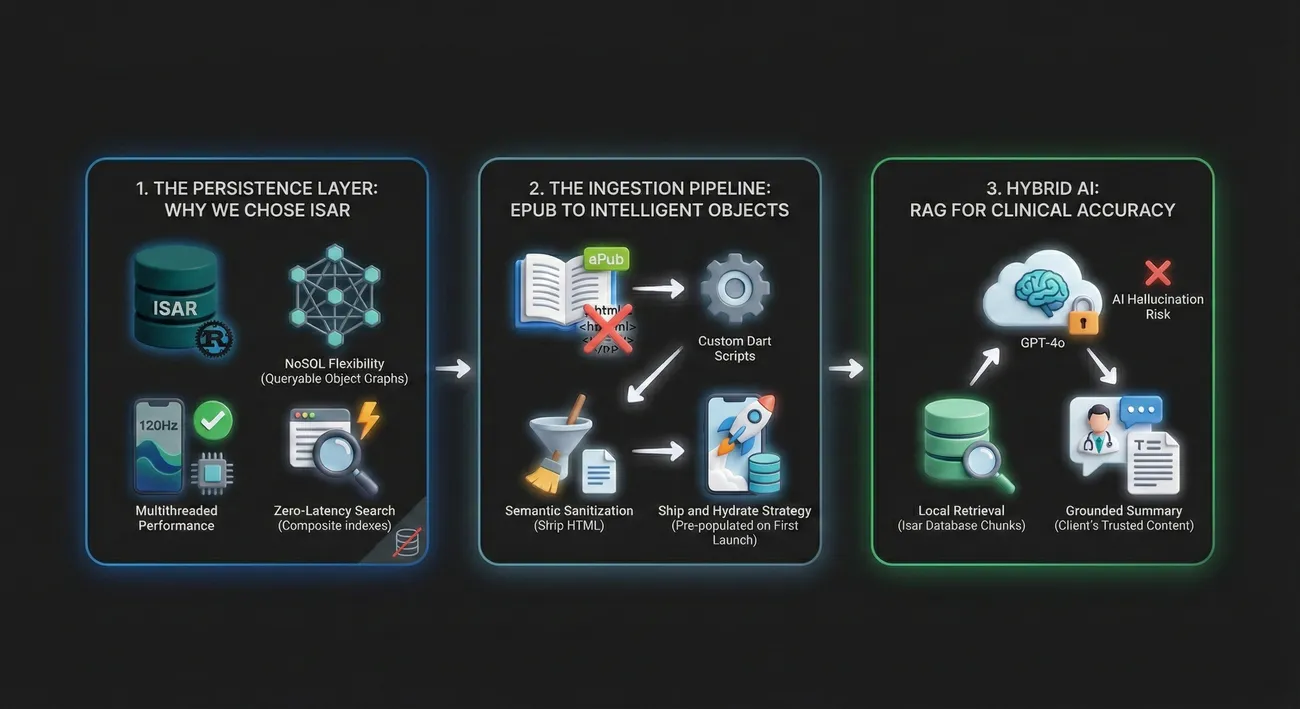
1. The Persistence Layer: Why We Chose Isar
We replaced standard SQLite with Isar, a high-performance NoSQL engine with a Rust backend. This allowed for:

Multithreaded Performance
The UI remains at a fluid 120Hz while the database crunches data in the background.

NoSQL Flexibility
We modeled complex medical hierarchies as queryable object graphs rather than rigid tables.

Zero-Latency Search
Using composite indexes to filter by category, age, and keyword simultaneously.
2. The Ingestion Pipeline: ePub to Intelligent Objects
We developed custom Dart scripts to "explode" static ePub files and reconstruct them into structured database objects. This included:

Semantic Sanitization
Stripping noisy HTML while preserving clinical meaning.

"Ship and Hydrate" Strategy
Pre-populating the database during the build process so users have immediate access upon the first launch.
3. Hybrid AI: RAG for Clinical Accuracy
To solve the scalability issue, we abandoned manual builds in favor of a Repository Dispatch pattern using GitHub Actions.

Local Retrieval
The app finds the 5 most relevant text chunks from the local Isar database.

Cloud Augmentation
These chunks are sent to GPT-4o to generate a summary grounded strictly in the client’s trusted content.
Key Results
The transition from a static e-book to an intelligent CDSS yielded transformative results for the client:

Sub-Millisecond Retrieval
Achieved instant search results across millions of medical tokens.
100% Offline Utility
Vital clinical guidelines remain accessible without any internet connection.
High-Scale Data Handling
Successfully indexed over 50,000 sections in under 15 seconds.
Enhanced Search Recall
Index-time synonym expansion ensures "heart attack" always surfaces "myocardial infarction" without runtime lag.
Cross-Platform Ubiquity
A single codebase deployed to iOS, Android, Web, Windows, macOS, and Linux.
Start Fresh Or Scale Up! Let's Start With Project Discovery.
Whether you are launching a new vision from scratch or need to inject quality into an ongoing project, our team brings the expertise to make it happen. We build solid foundations from the start.