

Case Study
Scaling Wellness: 60% Cost Reduction Via Clean Architecture
See how Acme Software used Flutter and Clean Architecture to eliminate technical debt, launch mobile apps, and cut database costs by 60%. Read the case study.
Key Result
60% Reduction in Database Costs
Industry
Client
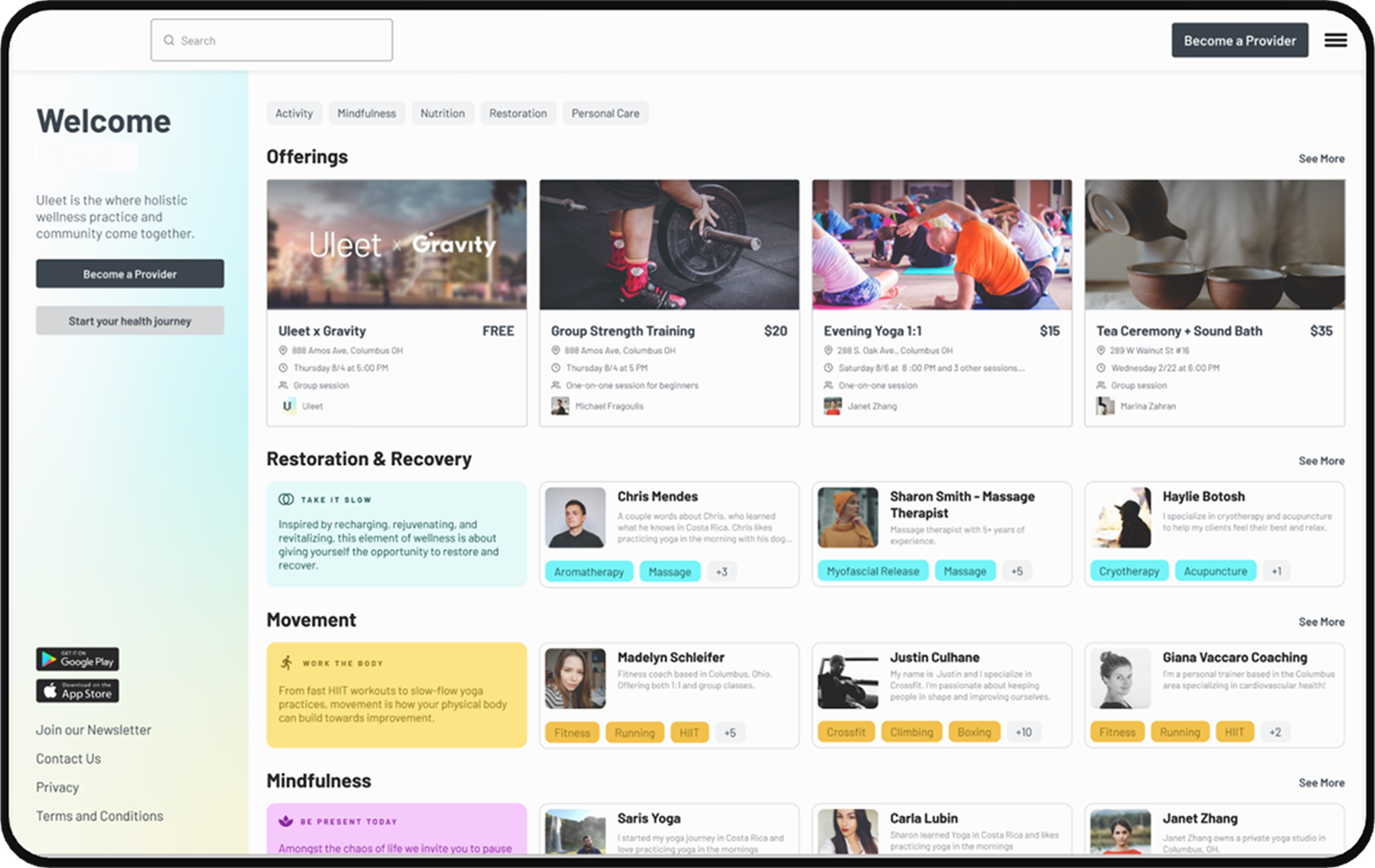
The Wellness Marketplace
Tech Stack

How The Wellness Marketplace Scaled To Mobile And Cut Cloud Costs By 60%
Facing an "existential crisis" due to massive technical debt and skyrocketing cloud bills, The Wellness Marketplace partnered with Acme Software to overhaul its legacy infrastructure. By migrating from a monolithic React web app to a Flutter-based Clean Architecture, the platform achieved a unified codebase and significant operational savings.
The Challenge: The Cost of "Direct-to-Database" Logic
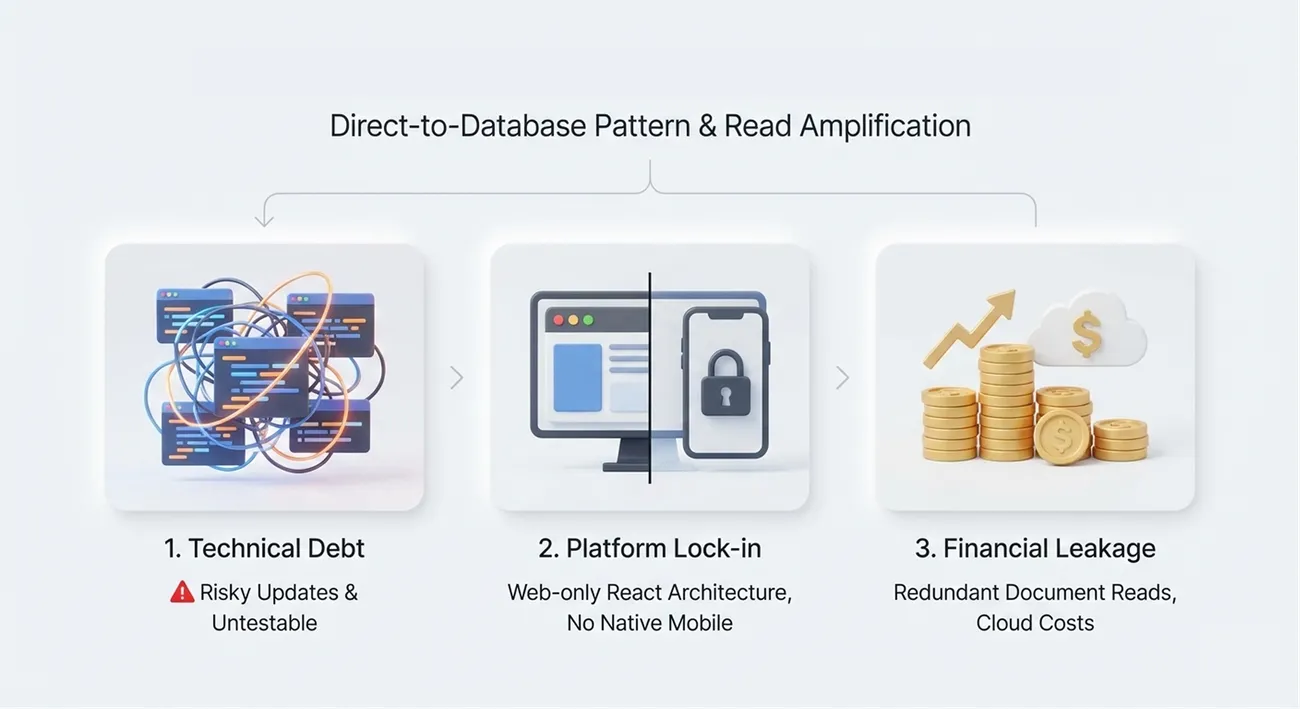
The Wellness Marketplace was a victim of its own rapid growth. Originally built using a "Direct-to-Database" pattern—where the UI was tied directly to Firebase—the platform suffered from Read Amplification. Inefficient rendering logic triggered exponential database operations, causing cloud costs to inflate disproportionately to revenue.

Technical Debt
Business logic was buried in UI components, making updates risky and testing nearly impossible.
Platform Lock-in
The web-only React architecture couldn't support the native mobile experience providers demanded.
Financial Leakage
Redundant document reads drove up Firestore egress costs during every user session.
The Solution: Architectural Sovereignty with Flutter
Acme Software implemented a strategic pivot to Google’s Flutter framework paired with Clean Architecture principles. This move wasn't just about cross-platform UI; it was about enforcing strict boundaries between business logic and external services.
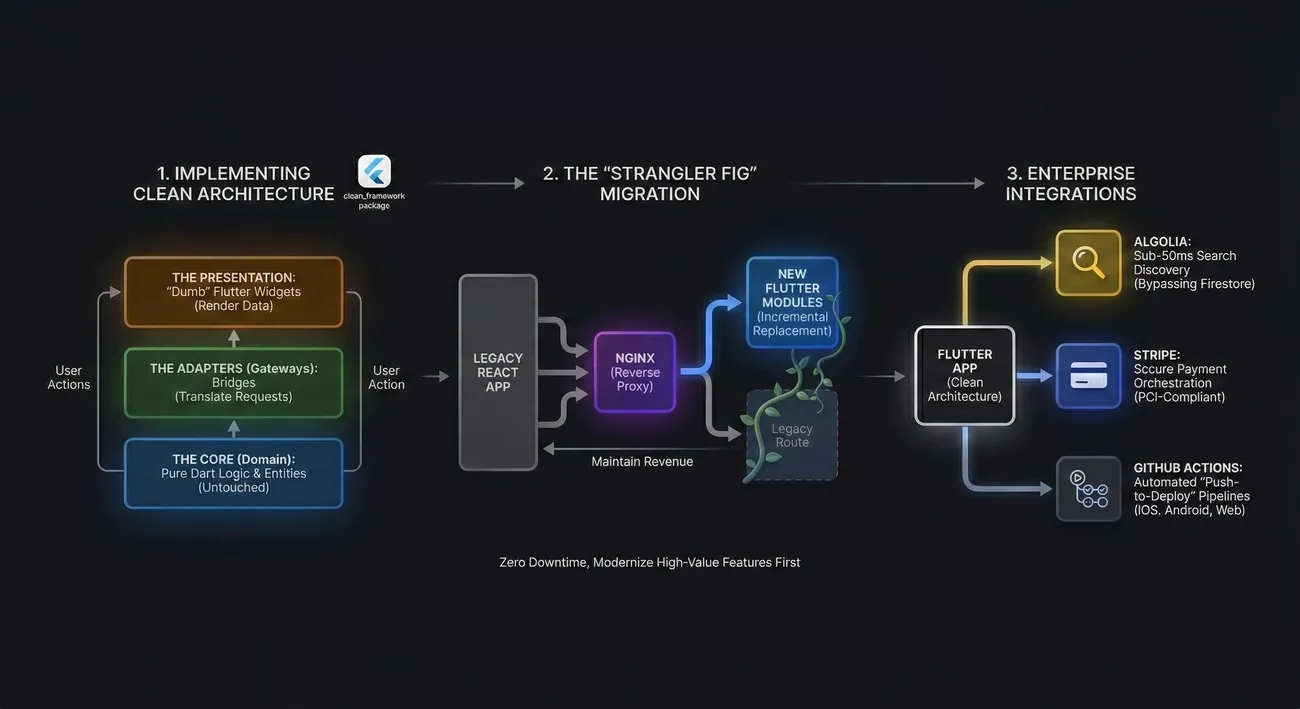
1. Implementing Clean Architecture
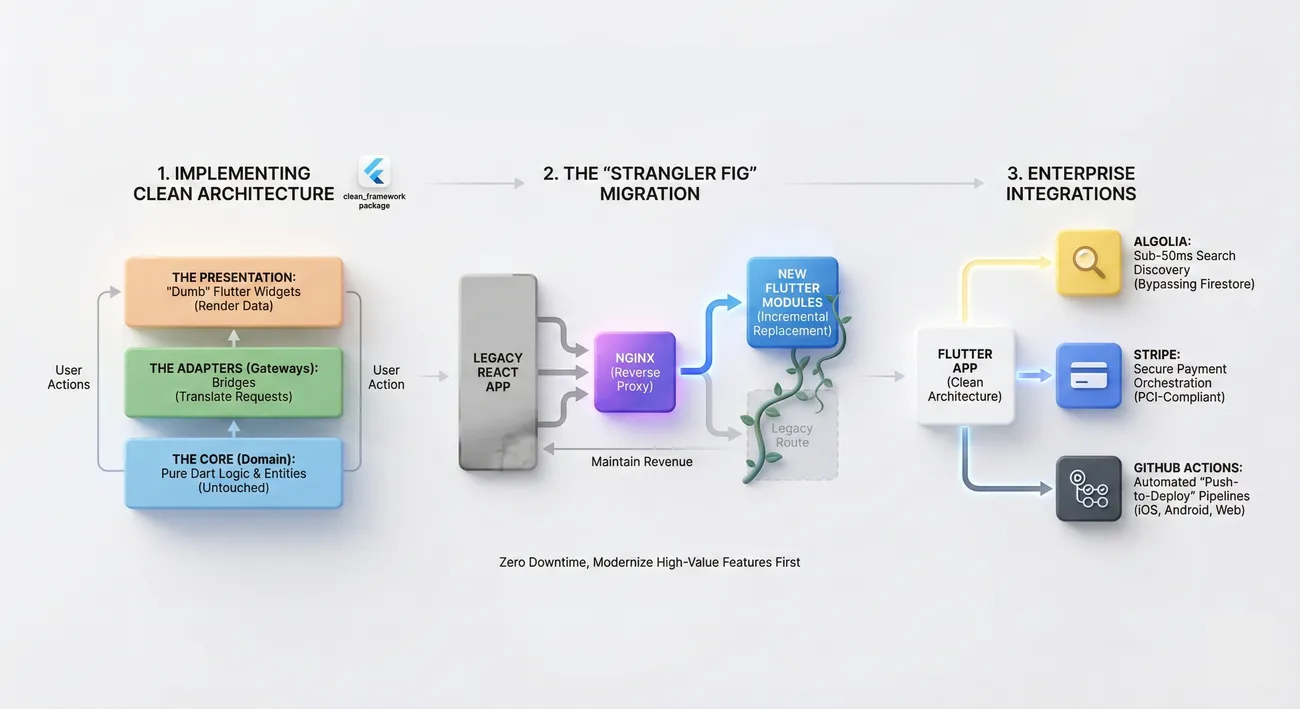
Using the clean_framework package, we separated the application into three distinct layers:

The Core (Domain)
Pure Dart logic and entities that remain untouched if the database or UI changes.

The Adapters (Gateways)
Bridges that translate business requests into external actions.

The Presentation
"Dumb" Flutter widgets that only render data provided by Presenters.
2. The "Strangler Fig" Migration
To ensure zero downtime, we used the Strangler Fig pattern. Using Nginx as a reverse proxy, we incrementally replaced legacy React routes with new Flutter modules. This allowed the client to maintain revenue while modernizing high-value features first.
3. Enterprise Integrations

Algolia
Integrated for sub-50ms search discovery, bypassing expensive Firestore reads.

Stripe
Encapsulated payment orchestration for secure, PCI-compliant financial transactions.

GitHub Actions
Automated "Push-to-Deploy" pipelines for iOS, Android, and Web.
Key Results
The transition transformed the platform from a fragile prototype into a robust enterprise ecosystem.

60% Reduction in Database Reads
Optimized rendering and logic-based caching in the Gateway layer drastically cut Firestore egress costs.
3x Engineering Productivity
A single Flutter codebase replaced the need for separate Web, iOS, and Android teams.
Instant Time-to-Market
Automated CI/CD pipelines reduced release overhead from days to just 20 minutes.
Hardened Security
Moving critical logic to Cloud Functions created a "Backend-for-Frontend" (BFF) that prevents client-side manipulation.
Start Fresh Or Scale Up! Let's Start With Project Discovery.
Whether you are launching a new vision from scratch or need to inject quality into an ongoing project, our team brings the expertise to make it happen. We build solid foundations from the start.